
SR&ED and net losses: how losses interact with your investment tax credit

Many companies doing qualifying SR&ED work are also running at a loss — especially in early stages when R&D spending is high and revenue hasn’t caught up. The good news is that SR&ED was specifically designed with this reality in mind, and the tax treatment of SR&ED credits in loss years is more favourable than […]
Can Renewable Energy Companies Claim SR&ED?

Renewable energy companies operate in a sector where technical uncertainty is common — site-specific performance, grid integration, and equipment durability under real-world conditions all regularly diverge from manufacturer specifications and published research. Where Eligibility Commonly Shows Up ● Adapting equipment or system design to perform reliably under site-specific climate or terrain conditions that existing designs […]
How CRA’s SR&ED technical reviewers actually evaluate your claim

Most SR&ED filers think of CRA reviews as document requests. The reality is that a technical review is closer to a structured engineering interview — and understanding how CRA technical reviewers are trained and what they’re actually looking for can significantly change how you prepare. Who technical reviewers are CRA’s SR&ED technical reviewers are credentialled […]
SR&ED Case Study: EV Battery Thermal Management System Design

Background An EV component manufacturer was developing a battery pack for a commercial vehicle application involving repeated fast-charging cycles and sustained high-load operation, conditions more demanding than the thermal management approach used in the manufacturer’s existing passenger vehicle designs. The Challenge Existing passive and standard active cooling designs couldn’t maintain the battery pack within safe […]
SR&ED and the C-15 legislative changes: what’s different in 2025

Canada’s SR&ED program underwent its most significant structural update in years through Bill C-15 and subsequent regulatory changes. For companies that have been filing SR&ED claims under the old rules, understanding what changed — and what didn’t — is essential for accurate 2025 planning. Background: why the changes were made The federal government has signalled […]
SR&ED for Automotive and EV Component Manufacturers

The shift toward electrification has put automotive and component manufacturers into some of the most technically uncertain territory the sector has seen in decades — which translates directly into a strong base of potential SR&ED claims for companies doing the underlying engineering. Where Eligibility Commonly Shows Up ● Developing thermal management systems for battery packs […]
What happens if you file SR&ED late — or not at all?

The 18-month filing deadline for SR&ED is one of the hardest rules in the Canadian tax system. There is no extension, no late-filing penalty regime, and no CRA discretion to accept a claim filed after the window closes. The deadline simply ends your right to claim the credit for that year. Despite this, many Canadian […]
SR&ED Case Study: Ore Processing Efficiency in Variable Ore Bodies

Background A mining operation’s processing plant, designed around a consistent ore profile from its primary deposit, began experiencing significant recovery-rate variability as it began blending ore from a secondary deposit with meaningfully different mineralogy. The Challenge The existing flotation parameters, tuned for the primary deposit, produced inconsistent recovery rates on the blended feed, and it […]
SR&ED in Mining and Resource Extraction
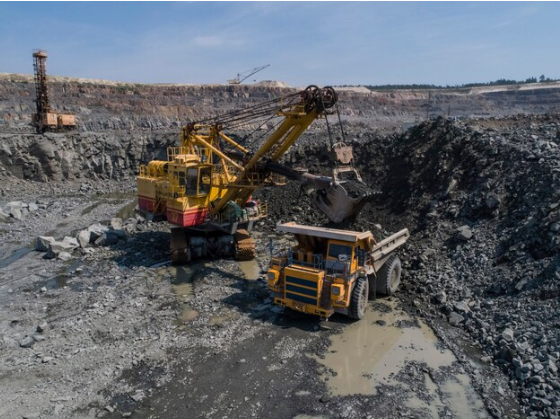
Mining operations generate substantial SR&ED-eligible work, but the sector’s claims often go under-filed because the work is embedded in operational problem-solving — a processing plant adjustment, an equipment modification — rather than a formally labelled research project. Common Sources of Eligible Work ● Developing processing methods to handle ore bodies with variable or unusually complex […]
SR&ED Case Study: Warehouse Routing Optimization at Scale

Background A fulfillment technology company’s warehouse routing system, built on a standard shortest-path solver, worked well for smaller facilities but produced increasingly inefficient pick paths as clients expanded into larger, more complex multi-zone warehouses. The Challenge The team needed a routing approach that could compute near-optimal pick paths within a strict time budget for warehouses […]