
SR&ED Case Study: Ore Processing Efficiency in Variable Ore Bodies

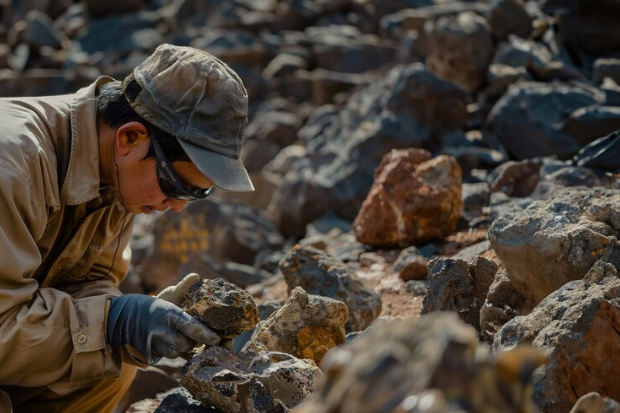
Collectors-analyzing-and-categorizing-meteorite-finds

Background

A mining operation’s processing plant, designed around a consistent ore profile from its primary deposit, began experiencing significant recovery-rate variability as it began blending ore from a secondary deposit with meaningfully different mineralogy.

The Challenge

The existing flotation parameters, tuned for the primary deposit, produced inconsistent recovery rates on the blended feed, and it was unclear whether the process could be adapted to handle the variability or whether a fundamentally different processing approach was required.

Technological Uncertainty

It was not known in advance whether adjusting reagent chemistry and flotation parameters could stabilize recovery rates across the blended ore’s mineralogy range, or whether the variability exceeded what the existing process configuration could accommodate.

Experimental Development

The team systematically tested combinations of reagent types, dosing rates, and flotation circuit adjustments across representative blended ore samples, measuring recovery rate and concentrate grade for each configuration.

What Failed?

An initial reagent adjustment stabilized recovery on moderate blend ratios but failed to maintain performance at higher proportions of the secondary ore, requiring the team to investigate an additional conditioning step before flotation.

Technological Advancement

The team developed a modified reagent scheme paired with an ore-blend-responsive conditioning step that maintained stable recovery rates across the full blending range encountered in production, generating new process knowledge specific to this ore combination.

Potentially Relevant SR&ED Activities

●   Systematic reagent and flotation parameter testing across blended ore samples

●   Recovery rate and concentrate grade benchmarking across configurations

●   Development of a blend-responsive conditioning step

What Would Generally Not Qualify

Running the finalized, validated process configuration on subsequent production batches within the established blend range would be routine operation and would not itself qualify.

Documentation

Recovery rate and grade data across reagent configurations, mineralogical analysis of the blended ore samples, and process trial records would support this claim.


About The Author

Dale Doering

Dale Doering is the owner of SRED Consultants Inc., helping businesses navigate the complexities of Scientific Research and Experimental Development (SR&ED) claims. With a strong understanding of the technical and interpretive requirements of the SR&ED program, Dale works with companies to identify eligible projects, document technological challenges, and clearly demonstrate the systematic experimentation or analysis undertaken to achieve advancement. His approach focuses on translating complex technical work into well-supported SR&ED claims, helping clients maximize eligible opportunities while maintaining a clear understanding of the program’s requirements.

Recent Posts

Frequently Asked Questions

Why did the mining operation face issues when blending ore from the secondary deposit?

The processing plant was originally calibrated for a consistent ore profile from its primary deposit. Blending ore from a secondary deposit with a significantly different mineralogy caused unpredictable recovery rates, as the existing flotation parameters could not handle the increased mineral variability.

The uncertainty was whether modifying the reagent chemistry and flotation parameters could stabilize recovery rates across the variable ore blends, or if the mineralogical differences exceeded the limits of the existing process layout and required a complete redesign.

Initial adjustments to the reagent scheme worked for moderate blend ratios but failed when higher proportions of the secondary ore were introduced. To overcome this, the team conducted further testing and developed a specialized pre-flotation conditioning step responsive to the specific ore blend.

Qualifying activities include:

– Systematic testing of reagent types, dosing rates, and flotation parameters across various blended samples.

– Benchmarking recovery rates and concentrate grades across different configurations.

– Development and testing of the blend-responsive conditioning step.

Standard production runs using the finalized, validated process configuration within established parameters do not qualify, as they represent routine operations. To support the claim, documented evidence such as recovery rate and grade data across testing configurations, mineralogical analysis records, and detailed process trial logs are required.

Related Post