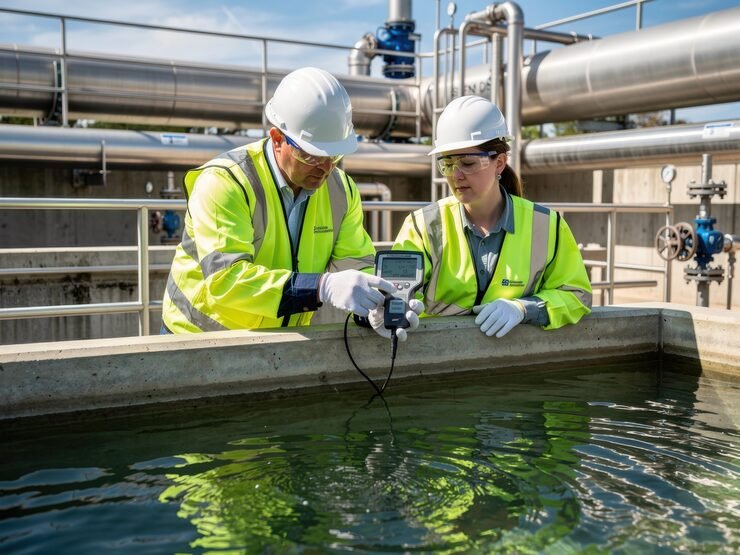
Water treatment and environmental engineering firms regularly encounter site-specific contaminant profiles that established treatment processes weren’t designed for — exactly the kind of genuine technical uncertainty the SR&ED program targets, even though the sector rarely thinks of itself as doing ‘R&D.’
Where Eligibility Commonly Shows Up
● Developing treatment processes for contaminant combinations or concentrations existing standard methods don’t reliably address
● Adapting treatment technology to source water with unusual variability that degrades standard process performance
● Solving unexpected fouling, scaling, or efficiency problems that persist despite following established design guidance
● Developing new approaches to meet discharge or reuse standards that existing treatment trains can’t consistently achieve
What Generally Doesn’t Qualify
● Standard treatment plant operation once a process is established and validated
● Routine equipment installation and commissioning per manufacturer specifications
● Standard compliance testing and monitoring using established methods
● Applying an already-proven treatment train to a new site with comparable water chemistry
Why Site-Specific Water Chemistry Matters
Published treatment guidance is typically developed and validated against representative water chemistry, not a specific site’s actual composition. When a facility’s real-world influent behaves differently than the published design basis predicted — and the team has to systematically investigate why — that divergence is often where the eligible work sits.


