
SR&ED for Additive Manufacturing and 3D Printing

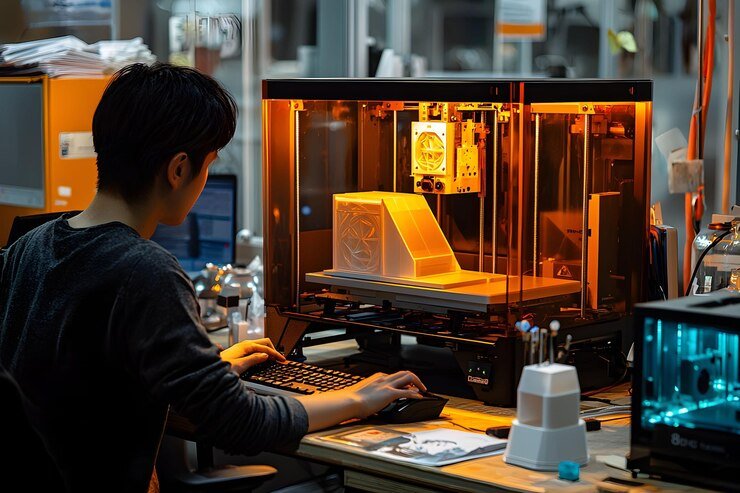
designer-operates-3d-printer-modern-workshop-dusk

Additive manufacturing sits at an unusual intersection of mature commercial technology and genuinely unresolved engineering problems — print reliability, material behaviour, and design-for-additive rules are still active areas where standard practice runs out quickly once requirements get demanding.

Where Eligibility Commonly Shows Up

●   Developing new print parameters or process controls to achieve mechanical properties that existing published parameters don’t reliably deliver

●   Formulating or qualifying new print materials for applications outside their documented performance envelope

●   Solving part reliability or defect problems — warping, porosity, delamination — that persist despite following established process guidance

●   Developing novel part geometries or lattice structures where structural performance can’t be predicted using existing design rules

What Generally Doesn’t Qualify

●   Standard production printing using validated, established parameters

●   Routine machine calibration and maintenance

●   Applying existing, published print settings to a new but unremarkable part design

●   Post-processing using established, documented finishing techniques

Where the Documentation Already Exists

Print process logs, failed build records, and material test data are typically already being generated as a byproduct of running an additive manufacturing operation. The gap is usually in recognizing that a string of failed prints chasing a specific mechanical property — rather than isolated one-off defects — is exactly the kind of systematic investigation the SR&ED program is designed to reward.

About The Author

Dale Doering

Dale Doering is the owner of SRED Consultants Inc., helping businesses navigate the complexities of Scientific Research and Experimental Development (SR&ED) claims. With a strong understanding of the technical and interpretive requirements of the SR&ED program, Dale works with companies to identify eligible projects, document technological challenges, and clearly demonstrate the systematic experimentation or analysis undertaken to achieve advancement. His approach focuses on translating complex technical work into well-supported SR&ED claims, helping clients maximize eligible opportunities while maintaining a clear understanding of the program’s requirements.

Recent Posts

Frequently Asked Questions

What makes additive manufacturing a strong candidate for SR&ED claims?

Additive manufacturing often sits at the intersection of mature commercial tech and unresolved engineering challenges. It qualifies when companies face technological uncertainty in areas like print reliability, material behavior, or design rules where standard practices fall short.

Eligible work commonly includes:

– Developing new print parameters or process controls to achieve specific mechanical properties not reliably delivered by published settings.

– Formulating or qualifying new print materials for demanding, undocumented applications.

– Solving persistent defect and reliability problems (such as warping, porosity, or delamination) despite following established process guidance.

– Developing novel part geometries or lattice structures whose structural performance cannot be predicted using existing design rules.

Activities that fail to meet SR&ED eligibility criteria include:

– Standard production printing using already-validated and established parameters.

– Routine machine maintenance and calibration.

– Applying existing, published print settings to a new but unremarkable part design.

– Post-processing using established and documented finishing techniques.

Most operations naturally generate helpful documentation as a byproduct of their regular workflow, including print process logs, failed build records, and material test data.

A string of failed prints aimed at chasing a specific mechanical property should not be viewed as isolated, one-off defects. Instead, they represent the kind of systematic investigation and technological advancement that the SR&ED program is designed to reward.

Related Post