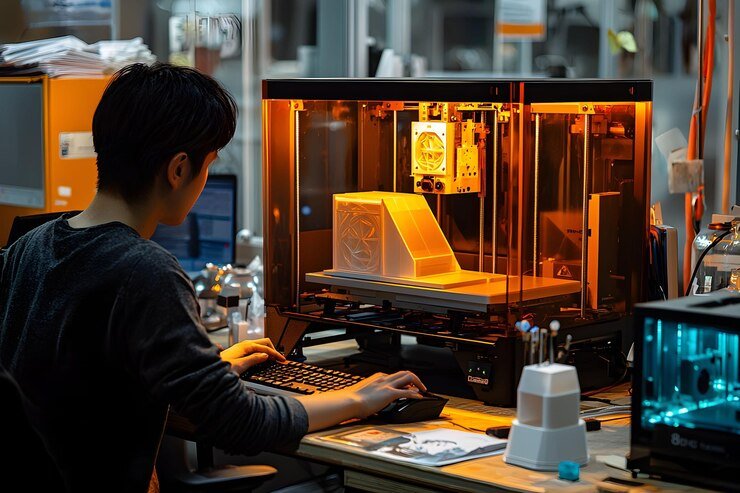
Additive manufacturing sits at an unusual intersection of mature commercial technology and genuinely unresolved engineering problems — print reliability, material behaviour, and design-for-additive rules are still active areas where standard practice runs out quickly once requirements get demanding.
Where Eligibility Commonly Shows Up
● Developing new print parameters or process controls to achieve mechanical properties that existing published parameters don’t reliably deliver
● Formulating or qualifying new print materials for applications outside their documented performance envelope
● Solving part reliability or defect problems — warping, porosity, delamination — that persist despite following established process guidance
● Developing novel part geometries or lattice structures where structural performance can’t be predicted using existing design rules
What Generally Doesn’t Qualify
● Standard production printing using validated, established parameters
● Routine machine calibration and maintenance
● Applying existing, published print settings to a new but unremarkable part design
● Post-processing using established, documented finishing techniques
Where the Documentation Already Exists
Print process logs, failed build records, and material test data are typically already being generated as a byproduct of running an additive manufacturing operation. The gap is usually in recognizing that a string of failed prints chasing a specific mechanical property — rather than isolated one-off defects — is exactly the kind of systematic investigation the SR&ED program is designed to reward.