SR&ED for Automotive and EV Component Manufacturers

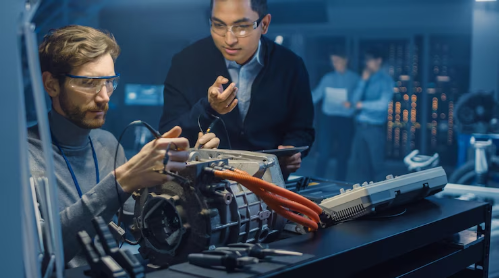
A-group-of-men-working-on-a-machine

The shift toward electrification has put automotive and component manufacturers into some of the most technically uncertain territory the sector has seen in decades — which translates directly into a strong base of potential SR&ED claims for companies doing the underlying engineering.

Where Eligibility Commonly Shows Up

●   Developing thermal management systems for battery packs where existing designs can’t maintain performance under the target duty cycle or climate range

●   Engineering components to meet weight, durability, or performance targets that require new materials or manufacturing processes

●   Solving noise, vibration, and harshness (NVH) problems specific to electric powertrains that combustion-era methods don’t address

●   Developing new manufacturing or joining processes for materials combinations existing automotive processes weren’t designed for

What Generally Doesn’t Qualify

●   Standard production of validated, established component designs

●   Routine tooling and manufacturing line commissioning per established specifications

●   Standard quality testing and compliance validation using established protocols

●   Cosmetic or minor design variants of existing components

A Sector in Genuine Technical Transition

Because so much of the industry’s established engineering knowledge was built around internal combustion, teams working on electrified platforms frequently encounter problems where existing automotive standards simply don’t apply — a strong signal that the eligibility test’s requirement for genuine uncertainty is being met.

About The Author

Dale Doering

Dale Doering is the owner of SRED Consultants Inc., helping businesses navigate the complexities of Scientific Research and Experimental Development (SR&ED) claims. With a strong understanding of the technical and interpretive requirements of the SR&ED program, Dale works with companies to identify eligible projects, document technological challenges, and clearly demonstrate the systematic experimentation or analysis undertaken to achieve advancement. His approach focuses on translating complex technical work into well-supported SR&ED claims, helping clients maximize eligible opportunities while maintaining a clear understanding of the program’s requirements.

Recent Posts

Frequently Asked Questions

How does the shift toward electrification impact SR&ED claims for automotive manufacturers?

The transition to electric vehicles places manufacturers in highly technically uncertain territory because much of the industry’s existing engineering knowledge was built around internal combustion. This lack of applicable traditional standards creates a strong base of technical uncertainty, fulfilling key requirements for SR&ED claims.

Eligibility commonly appears when developing thermal management systems for battery packs under difficult climate ranges or duty cycles, engineering components to meet new weight and durability targets using novel materials, solving electric powertrain-specific NVH (noise, vibration, and harshness) problems, and developing new manufacturing or joining processes for unique material combinations.

No. Standard production of validated component designs, routine tooling and manufacturing line commissioning per established specifications, standard quality testing, and cosmetic or minor design variants do not qualify.

Combustion-era methods don’t address the unique performance challenges of electric powertrains—such as specific noise, vibration, and harshness (NVH) profiles—meaning teams frequently encounter technical problems where existing automotive standards simply do not apply.

When engineering teams working on electrified platforms encounter complex problems that existing automotive standards and historical combustion-era knowledge cannot solve, it serves as a strong signal that genuine technical uncertainty is present.

Related Post